
DIALOGICAL PERFORMANCES

The ATLAS creates dialogical communication channels by facilitating and experimenting with the findings and outcomes of the research process. This time, artists and musicians played an important role: by using panels, the amalgamation of various techniques and approaches from the fields of contemporary art and concert music were all experimented with, questioned, modified, and discussed.
There were panels, which functioned as laboratories for collaborative, performative experiments based on dialogical practices. They consisted of the Agents, musicians, and artists, with the audience actively encouraged to take part. Everything was recorded, and their outcome will be observed, processed, and then located in the Atlas Online database. The architecture of the online platform will enable its users to access documentation and interpretations of these performances from different perspectives within these two disciplines.
Dialogical Performances merged the concert musical/sound performances and visual art exhibitions/presentations along with panels, workshops, lecture-performances, and performances. Those two days inhabited a social space that enabled participants and viewers to exchange ideas and critical perspectives on the curatorial and conductorial models, approaches, techniques, patterns, and methodologies.
THE PROGRAMME
[12.—13.06.2025]
kex – kunsthalle exnergasse, WUK
Vienna
Mapping The Atlas
Moderated by Basak Senova and David Chisholm
Panel

The panel served as collaborative laboratories where artists and musicians play a key role in experimenting with, questioning, and discussing techniques from contemporary art and concert music. Through some keywords some subjective definitions and anecdotes were collected. They were recorded, processed, and stored in the Atlas Online database.
‘The ABC of Conducting: An Introduction to Conducting’
Ilan Volkov
Workshop

This workshop was an introduction to conducting, explaining what it is and how it works by unmasking the mystery behind the Conductor’s role with a speicific focus on New Music. Volkov explained the basics of his methodology of conducting, including key techniques and principles. Participants had the opportunity to perform under his direction.
Selected Concerts
from the Helsinki Philharmonic Orchestra
Screening
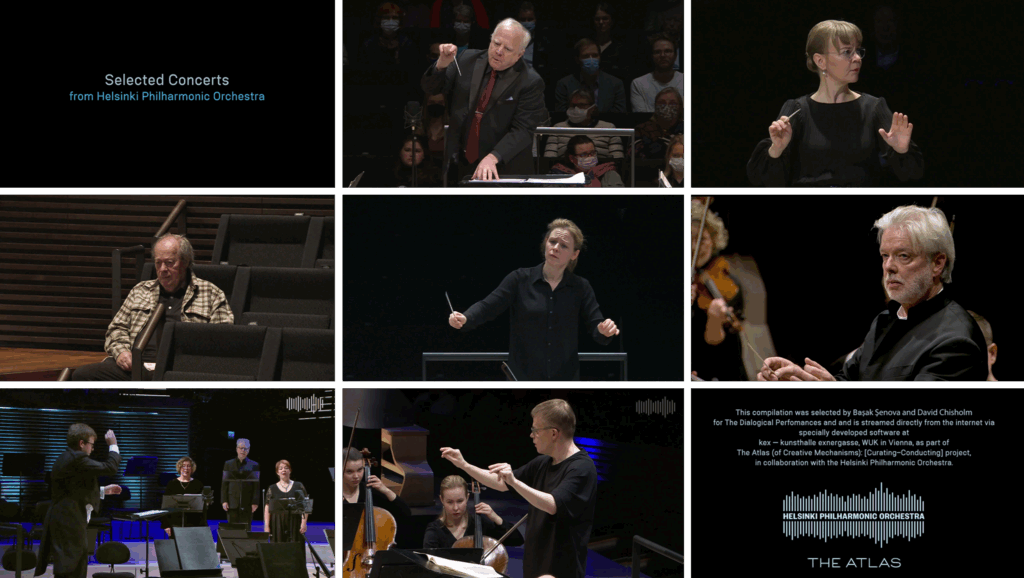
The Helsinki Philharmonic Orchestra, founded in 1882 with 36 players, now consists of 102 musicians and has its home at Musiikkitalo, the Helsinki Music Centre. The orchestra provides weekly concerts and international tours, and, performs in various ensembles across Helsinki. The orchestra’s recordings have received numerous awards and earned several Grammy nominations. This screening featured selected orchestral concerts and interviews produced by the Helsinki Philharmonic Orchestra.
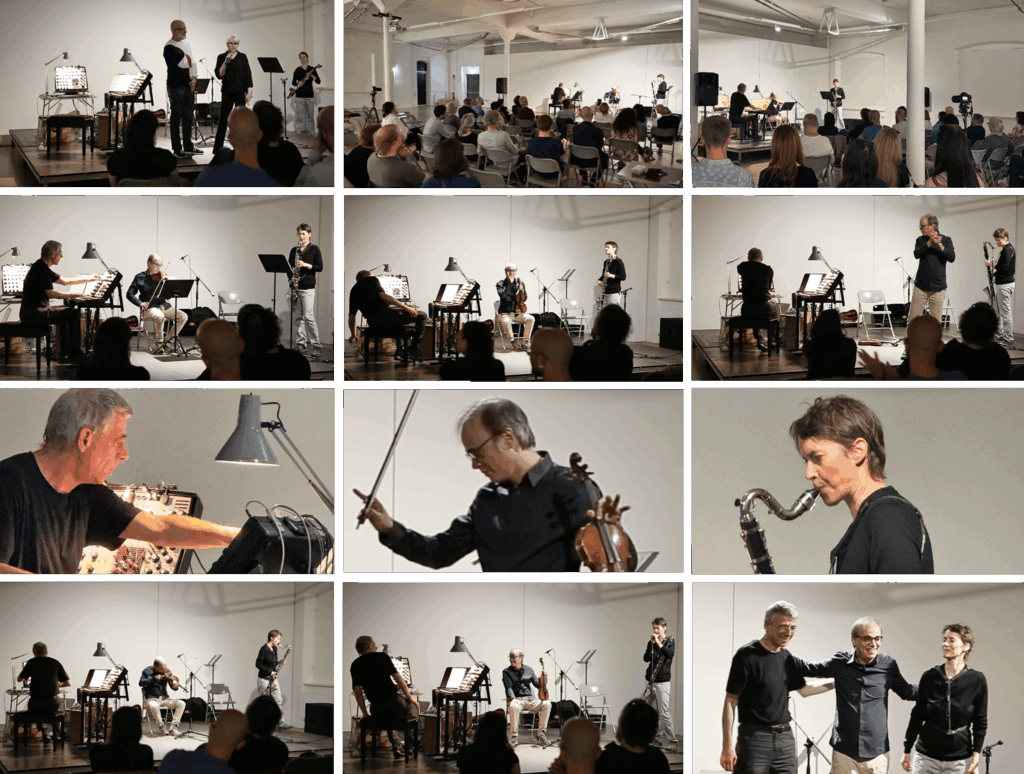
New Trio
Thomas Lehn (synth), Susanna Gartmayer (bass clarinet), and Ilan Volkov (violin)
Performance
The performance presented one new piece by Christian Wolff and a composition by the New Trio. The pieces dialogued with the concept of the exhibition and project, and included cues and various ideas around conducting.
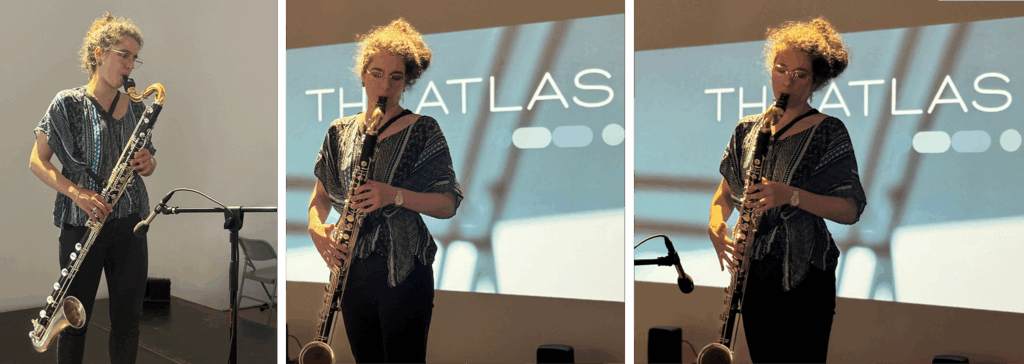
‘One Way Ticket’
Rebecca Minten
Performance
Rebecca Minten presented a solo bass clarinet performance where traditional melodies intertwine with experimental techniques. The piece merged instrument and body through instant composition as breath, gesture, and vibration shaped the sound in a bold exploration of risk and embodied musical creation.
‘Genesis of a Music – Composing with Harry Partch’
Marcus Schmickler
Lecture Performance
In his lecture performance, Marcus Schmickler presented and discussed his current work, The Great Wayfinders (Höhlenmusik I-IX). The work is based on a speculative paleontological point of departure involving Partch’s instruments and their physical models in the context of computer music and contemporary arts.
‘Sound as Score as Object’
Karl Salzmann
Performance
Karl Salzmann uses processed vinyl records as sculptural objects, musical scores, and sound sources. This approach departs from conventional practice in which scores and sounds are separate entities. Salzmann merged these elements in this performance so that score and sound become one.
Extracts
Microtonal Music Studios
Screening
Supported by the Kone Foundation and based in Helsinki, Microtonal Music Studios was founded by composer and artist Timo Tuhkanen as a centre for learning, sharing, and creating resources for microtonal music. The screening comprises selected excerpts from the workshops, performances, and lectures.
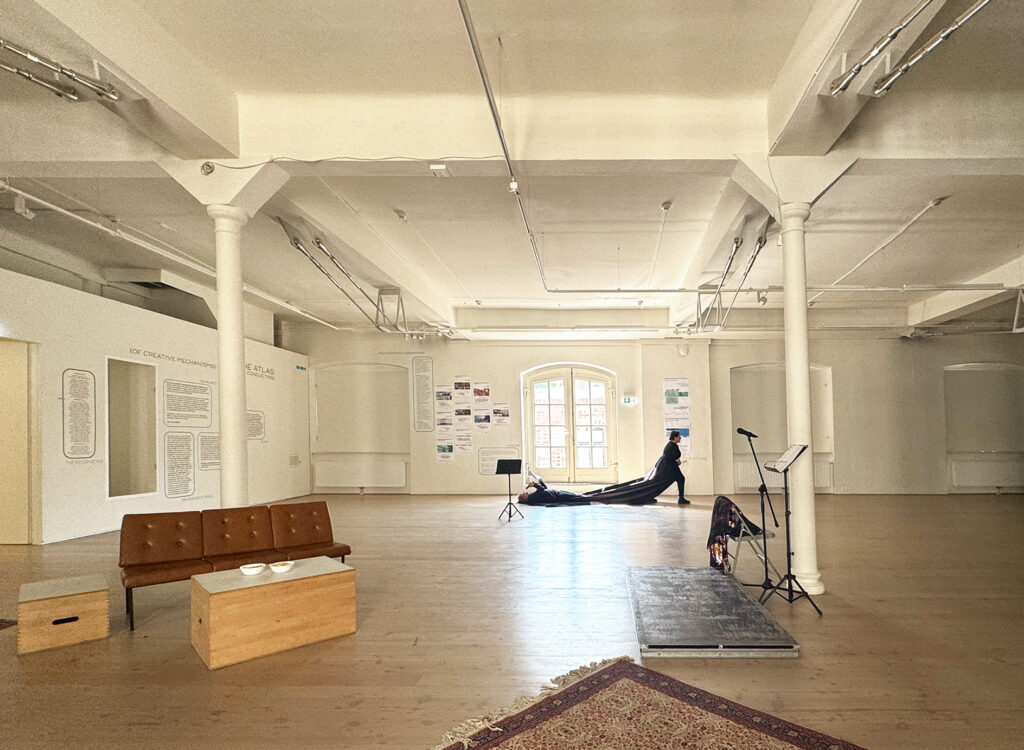
‘X≠Y’
Conducted by Timo Tuhkanen, collaboratively composed with Lore Lixenberg, and performed by both Lixenberg and Tuhkanen
Performance
Timo Tuhkanen and Lore Lixenberg presented a new work for solo voice and conductor in reference to the the complicated and psychological drama between Alma Mahler and Gustav Mahler.
This performance represented a collaboration between Tuhkanen and Lixenberg, initiated by Tuhkanen and building on his two years of research on Mahler. Lixenberg is an opera maker and vocalist whose work extends into coding, sound art, radiophonic composition, film, and direction.
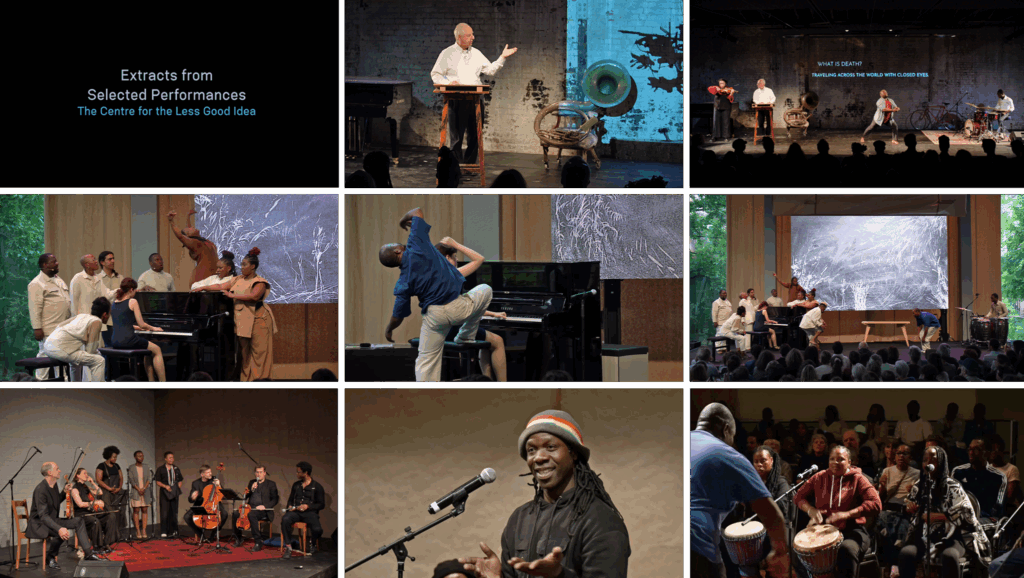
Selected performances
The Centre for the Less Good Idea
Screening
Based in Johannesburg, the Centre for the Less Good Idea is an experimental art space that provides a unique opportunity for artists from across disciplines and the vast social, economic, and racial divides in South Africa to collaboratively and collectively frame and develop new work and practices. The screening presents a selection of recent performances.
The Atlas Circle
Moderated by Başak Şenova and David Chisholm
The Atlas Circle concluded the Dialogical Performances by gathering and processing the outcomes and afterthoughts from the panels and events held over the past two days. The project’s Agents, along with other musicians and artists, reflected on the discussions and experiences in a conversational format. These conversations were recorded and added to the Atlas Online database.
kunsthalle exnergasse, WUK hosts Dialogical Performances. Atlas Online simultaneously processes Dialogical Performances and these case studies by detecting, formulating, and comparing the creative mechanisms used in curating and conducting.
https://www.wuk.at/en/events/the-atlas/dialogical-performances